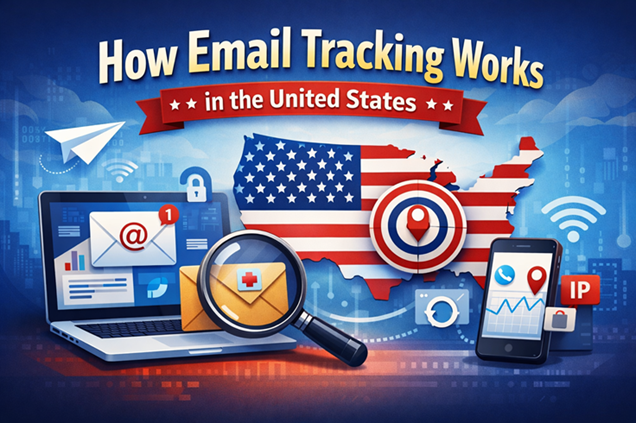
How Email Tracking Works in the United States
Email remains one of the most widely used communication tools in the United States. Americans rely on email for work, online shopping, subscriptions, financial services, and everyday communication. Behind the scenes, however, many emails contain tracking technology that quietly collects data about recipient behavior.
Email tracking is deeply integrated into modern digital marketing and customer communication. While it is often used to measure performance, it also raises serious privacy concerns. Many users are unaware that simply opening an email can trigger data collection.
Understanding how email tracking works is essential for anyone who wants to protect their inbox and maintain control over their personal information.
What Is Email Tracking?
Email tracking refers to techniques used to monitor how recipients interact with an email message. These techniques allow senders to collect information such as whether an email was opened, which links were clicked, how often the message was viewed, and sometimes limited technical data about the recipient.
Unlike website tracking, email tracking often occurs without visible consent prompts. In most cases, the tracking process is invisible to the recipient.
Why Email Tracking Is So Common in the United States
The United States has one of the largest email marketing industries in the world. Businesses depend on email performance data to optimize campaigns, increase engagement, and measure return on investment.
Marketers use tracking to answer questions such as whether an email subject line was effective or which call to action received the most clicks. From a business perspective, this data is valuable. From a user perspective, it often happens quietly.
Email tracking is used not only by marketers but also by software platforms, subscription services, and online publishers.
The Most Common Email Tracking Methods Used in the US
Tracking Pixels
Tracking pixels are one of the most widely used email tracking methods. A tracking pixel is a tiny transparent image embedded within an email. When the email is opened, the image loads from a remote server controlled by the sender.
This request sends information back to the server, confirming that the email was opened. The sender may also learn the time of the open and the type of device used.
Because tracking pixels are invisible, most users never realize they are present.
Link Tracking
Many emails do not contain direct links to websites. Instead, they use tracking links. When a user clicks a link, the request is first sent to a tracking server before being redirected to the final destination.
This allows companies to record which links were clicked and how often. Link tracking is commonly used in promotional emails, newsletters, and transactional messages.
Email Client and Device Signals
Some tracking systems collect limited technical data such as the email client, browser type, or operating system. This information helps senders optimize email design and delivery.
While this data is usually not precise enough to identify a person by itself, it contributes to a broader profile when combined with other data sources.
What Data Can Email Tracking Collect?
Email tracking can collect a variety of data points, including:
- Whether an email was opened
- Date and time of email interaction
- Which links were clicked
- Email client and device type
- Approximate location based on IP address
Individually, these data points may seem harmless. When combined over time, they can reveal detailed patterns about user behavior.
Who Uses Email Tracking?
Email tracking is widely used across many industries in the United States.
- Ecommerce companies tracking promotions
- Subscription services monitoring engagement
- Marketing agencies analyzing campaign performance
- Publishers measuring newsletter readership
In most cases, the goal is to improve communication rather than monitor individuals. However, the scale of data collection can still be significant.
Privacy Concerns for US Email Users
One of the main privacy concerns with email tracking is transparency. Many users are not informed when tracking occurs. Unlike website cookies, email tracking does not always provide clear notice or consent options.
This lack of visibility has raised concerns among privacy advocates, especially as email addresses are often linked to other personal data.
Email Tracking and Consumer Awareness
Studies have shown that many US consumers are unaware of how email tracking works. Some assume tracking only occurs when they click links, not when they simply open an email.
This misunderstanding highlights the importance of education. Knowing how tracking works allows users to make informed decisions about their email habits.
How to Reduce Email Tracking Exposure
While it is difficult to eliminate email tracking entirely, users can take practical steps to reduce exposure.
- Disable automatic image loading in email settings
- Be cautious when opening promotional emails
- Avoid clicking links from unknown senders
- Use separate email addresses for different purposes
Using a temporary email address for one time signups can also help reduce long term tracking.
The Role of Temporary Email in Privacy Protection
Temporary email services allow users to create disposable email addresses for short term use. This can help limit exposure when signing up for websites or accessing online resources.
While temporary emails are not suitable for every situation, they can be a useful tool for protecting a primary inbox from tracking and spam.
Email Tracking and the Future of Privacy
Email tracking continues to evolve alongside digital marketing technologies. As awareness grows, users are increasingly demanding transparency and control.
In the United States, privacy discussions are becoming more common, and consumer expectations are shifting toward greater accountability.
Final Thoughts
Email tracking plays a significant role in how digital communication functions in the United States. While it helps businesses understand engagement, it also raises important questions about privacy.
By understanding how email tracking works and adopting mindful email habits, users can better protect their personal information in an increasingly data driven world.